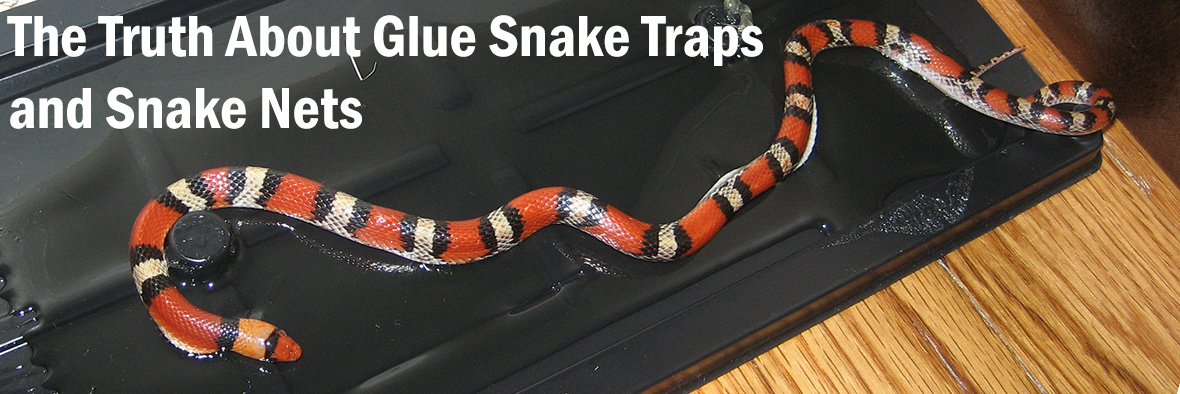
Why Snake Netting and Snake Glue Traps Are Inhumane
Author: Jessica Loticus
Why Snake Netting and Snake Glue Traps Are Inhumane
Most people do not like the idea of snakes on their property, but some methods of removing and preventing them are better than others. There are multiple humane methods for keeping snakes off of your property, but snake netting and glue traps are definitely not on that list. Both of those methods are inhumane and should not be used.
Learn why snake netting and snake glue traps are inhumane and what humane methods you should use to eliminate snakes from your property instead.
What Is Snake Netting?
Snakes Can Get Stuck in Netting
A snake trapped in netting will be unable to get out by itself, leaving it to die via starvation, exposure, or dehydration. Snakes trapped in netting are also easy targets for their natural predators, including larger snakes, large birds, raccoons, coyotes, foxes, and other animals.

Other Animals Can Also Get Stuck
Snakes are far from the only animal that can get stuck in this type of snake netting or even bird netting. You may also spot lizards, small mammals, or birds stuck in the netting. No matter which animal is caught, the situation is the same. They will be faced with a cruel death from some combination of exposure, dehydration, starvation, stress, and predators.
The Worst Types of Netting
Additionally, any netting that is on the ground, even for storage, is particularly problematic for snakes. This is because snakes may see it as a good hiding place, until they get stuck. Unfortunately, any type of netting that exists poses a problem. This includes landscaping netting and netting for erosion control or planting.
It Is Dangerous and Hard to Remove Snakes from Netting
This is made much more challenging by the stress and confusion of the snake. There is no way to tell the critter that you are assisting it and it already feels helpless and threatened. This is likely to provoke the snake (or other stuck critter) into aggression. In the best-case scenario, you will not get bitten. However, there is a very real chance of bites, especially if someone tries to untangle a snake despite not being familiar with the serpents.
In the case of a venomous snake, a bite can easily be lethal, putting the humans that try to help at a major risk. Even non-venomous snakes can be dangerous as there is still a risk of a bite. While there is no venom, any puncture wound carries a risk of infection.
What Are Glue Traps?
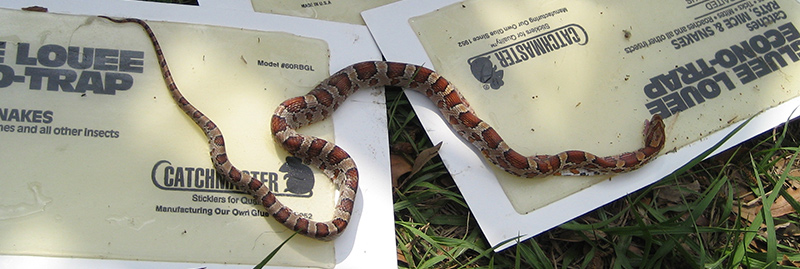
Death from Glue Traps Is Incredibly Inhumane
Snakes Have Slow Metabolisms, Making It Worse
This inhumane death is even worse for snakes, amphibians, and reptiles than other critters due to their slow metabolisms. That is because the slow metabolisms of these critters means that they will need days before they die of dehydration or starvation. That means that for several days, at least, a snake will be stuck on a glue trap, exhausted, stressed, hungry, thirsty, confused, and scared. This would be a horrible way for any living creature to die, especially when it occurs for a long period of time.
Removing Snakes from Glue Traps Can Cause Permanent Damage
Their scales are very likely to suffer permanent damage. Similarly, other critters that you try to remove from glue traps will likely experience permanent damage to their skin, fur, or feathers, depending on what they have.
You Can Remove Them with Oil
It is possible to remove snakes and other critters from glue traps using oil like vegetable oil, but this is much easier said than done. It takes a great deal of patience and the animal is unlikely to be unscathed at the end of the process.
Removing the Animal Puts People at Risk
Additionally, if someone uses oil or another method to try to get the snake off of the glue trap, they are putting themselves at risk of a serious injury, especially in the case of a venomous snake. Even with a non-venomous snake, there is a risk of a bite that could lead to infection. Given the stress that the snake will likely be under, the chances of it attacking are increased.
Glue Traps Will Hurt Any and All Animals That Come Across Them
Do Not Use Them for Any Animal
Because of this indiscriminate nature of glue traps, you should not use them to catch any pest, whether it is insects, rodents, or snakes. Even in those cases, you are likely to accidentally catch a snake and cause it the suffering described above. Depending on the type of animal you catch with a glue trap, they may even cause themselves physical harm trying to escape. Rodents, for example, have been known to pull out huge clumps of fur or even leave behind limbs to escape glue traps. There should be no question that this result is inhumane, as it is bad enough to require the animal to self-injure itself and suffer for the rest of its life.
You Could Hurt Pets
Remember that glue traps are indiscriminate and hurt any critter they come across. That can include pets. Larger animals like dogs may only get a little bit of fur or skin stuck, but even that will cause them pain as they pull out the fur in the attempt to escape. It is even worse for smaller pets, like small dogs or cats, as they may not be able to escape at all. If a cat gets stuck on a glue board, for example, you will likely need a veterinarian to help remove the glue board, and the feline frequently requires surgery.
Glue Traps Do Not Produce Results Anyway
However, this would turn into an increase in the food supply for the given species, which encourages breeding. The end result is that the population gets back to where it was originally, if not higher.
Glue Traps Are Also Expensive Over Time
These Traps Can Increase the Risk of Disease
Additionally, the stress from the situation combined with the long amount of time that animals are stuck on traps make it almost certain that they will go to the bathroom. Given that animal waste products are one of the more common ways that diseases are transmitted from pests to people, this is a serious risk.
Glue Traps Are Banned in Many Places
It May Be Illegal to Kill Snakes in Your Area
Given that most people cannot tell the difference between different species of snakes, it is best to exercise caution and just avoid killing all snakes.
Snakes Illegal to Kill at the Federal Level
No matter where in the United States you are, it is illegal to kill several species of snakes, including Puerto Rican boas, Mona boas, northern Mexican garter snakes, narrow-headed garter snakes, eastern Mississauga rattlesnakes, Atlantic salt marsh snakes, New Mexican ridge-nosed rattlesnakes, black pine snakes, eastern indigo snakes, San Francisco garter snakes, giant garter snakes, and alameda whip snakes. It is also illegal to kill copper belly water snakes in northern Indiana, Ohio, and Michigan.
States with at Least Some Restrictions
The following states have at least some additional restrictions in place regarding killing snakes, typically in the form of making it illegal to kill certain species. These states include Alabama, Arizona, Arkansas, California, Colorado, Connecticut, Delaware, Florida, Georgia, Idaho, Illinois, Indiana, Iowa, Maryland, Massachusetts, Michigan, Minnesota, Mississippi, Missouri, Nebraska, Nevada, New Hampshire, New Jersey, New Mexico, New York, North Carolina, Oklahoma, Oregon, Pennsylvania, Rhode Island, Tennessee, Texas, Utah, Vermont, Virginia, Washington, West Virginia, Wisconsin, and Wyoming.
Some of those states require a special hunting or fishing license to kill snakes, so you would need to check the local laws and submit an application for that license before even killing the snakes. Of those, the following ban any killing of snakes: Arkansas, Colorado, Georgia, Maryland, Missouri, New Jersey, New York, Rhode Island, Tennessee, Virginia, and Washington. Those states do typically have exceptions for particularly dangerous situations, which are evaluated on a case by case basis.
It is worth noting that the only reason Hawaii does not have any restrictions on killing snakes is that there should not theoretically be any there.
What to Do If You Find a Snake Stuck in Netting or a Glue Trap
Contact an Animal Expert
You should accept that you are unlikely to be able to get the snake or other animal off of the glue trap or out of the netting by yourself. At least, you are unlikely to do so in a way that does not result in any injuries for yourself or the animal. As such, the best option is always to consult a professional. Most people will contact a veterinarian or wildlife rehabilitator. If there is a local wildlife removal company that uses humane practice, they are also an option.
Explain the situation to the animal expert and ask them for advice. See if they can come to you or if you can bring the critter with the glue trap or netting to them for removal. They may be able to physically take care of the removal for you. In other cases, they may not be able to physically help you but can provide advice. Some of these experts will be able to walk you through the process of freeing the critter step by step, after letting you know about potential risks.
Removing the Animal Yourself
If you cannot get a hold of a wildlife expert and are determined to try removing the animal yourself, then you will need to grab thick gloves, a thick towel, and put on long sleeves and pants to protect your skin.
For a snake or other animal stuck to a glue trap, you will want to use cooking oil. If you can, heat the oil slightly, which you can do just by running it under some warm water. This will make it work better, but it is not necessary.
Use a gloved hand and the towel to restrain the snake or other animal by its head, using a grip that is firm yet gentle. Use the other hand to gently massage any areas where the snake is connected to the glue board with the oil. Within several minutes, the oil should start to soften the glue. Eventually, the glue will begin to loosen enough for the animal to be free.
If you remove an animal from a glue board yourself with oil, then you should keep the animal safe in a dark, quiet, and warm spot until you can bring it to a veterinarian or wildlife rehabilitator. That is because the oil can impact a snake’s ability to regulate its body temperature. In cases where an animal expert will not be able to check the snake or remove the oil, they may just suggest a brief holding period and give you other instructions.
Consider These Options Instead of Netting
Another alternative to netting is a rigid grating or grill, especially if you need to protect something like a pond. There are actually modular pond covers available that are usually safe for snakes.
If You Still Use Netting
If you still want to have netting on your property, you can take some steps to reduce the risk of snakes getting trapped. Move the netting off of the ground, at least 15 centimeters off of it. This reduces the chances that snakes will get stuck.
You can also try tightening the netting. This helps because there is a higher risk of snakes getting tangled with loose netting.
Other Ways to Prevent and Remove Snakes
Make Your Property Unattractive to Snakes
The best method of preventing snakes is to make your property unattractive to the critters. Get rid of debris and trim back any plants and bushes. These are all favorite hiding spots of snakes which are likely to make them see your property as the perfect shelter. You should also fill in gaps underneath rocks or concrete slabs as these are other snake favorites.
Seal Holes Into Your Home
To keep snakes out of your house, inspect the building and make sure there are no gaps that snakes can slither in. This includes gaps by windows and doors as well as small holes or cracks in the walls. As a bonus, this will also prevent any other uninvited pests and animals from entering your home.
Install a Solid Fence
You can also try to keep snakes off your property completely by using a solid fence. Remember not to choose a mesh fence or any type of netting as these will be ineffective and dangerous for the snakes. You would need a solid material.
Consult a Professional
You can also hire a professional who has experience dealing with snakes to inspect your property and give you advice on keeping away snakes. If you notice a snake on your property, call these professionals to humanely remove it.
Conclusion
Sources:
www.snakes.ngo/glue-traps/
www.snakes.ngo/snake-vs-netting
www.humanesociety.org/resources/glue-boards
www.peta.org/issues/wildlife/wildlife-factsheets/glue-traps
www.wildlife-removal.com/snakekeepaway.html
www.humanesociety.org/resources/what-do-about-snakes